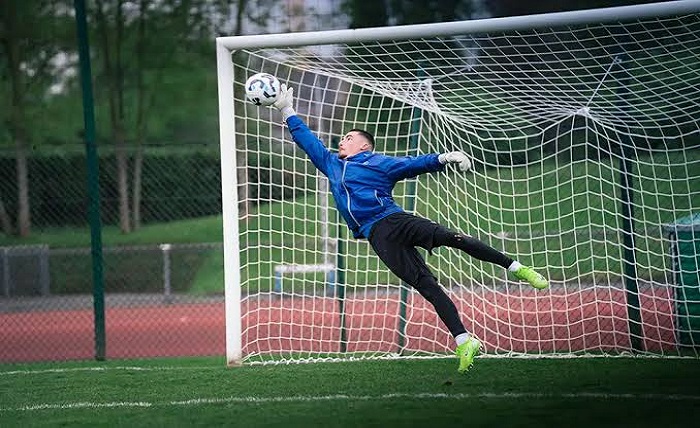
Traditional football modeling algorithms routinely experience massive variance because they treat shot conversion as an exclusively offensive attribute. When analysts evaluate a team’s scoring probability, they typically focus on attacking metrics like shot volume, crossing accuracy, and historical shot-conversion rates while relegating goalkeepers to passive variables. This one-sided approach introduces systematic errors into total-goal predictions, as an elite shot-stopper or an underperforming goalkeeper radically alters the empirical probability of a shot becoming a goal, irrespective of the forward’s reputation.
Why Goalkeeper Variance Distorts Standard Expected Goal Expectations
Expected Goals models calculate the mathematical probability of a scoring attempt resulting in a goal based on historical shot locations and defensive positioning. While these baseline frameworks successfully quantify the average difficulty of an attempt, they fundamentally break down because they do not account for the specific individual guarding the net. A standard shot carrying a thirty percent success probability against a league-average goalkeeper might drop below fifteen percent when facing an elite, hyper-reactive shot-stopper.
This discrepancy implies that teams with statistically weak defensive lines can consistently outperform their expected goals against metrics if their goalkeeper possesses elite shot-stopping metrics. Conversely, a structurally sound defensive block can suffer catastrophic goal concession rates if their goalkeeper exhibits poor positioning or a low save percentage on low-danger attempts. Failing to isolate this specific player variable causes public money to misprice match totals, as the market overreacts to team names while ignoring the individual keeping the ball out of the net.
The Shot-Stopping Spectrum of the 2013/2014 Bundesliga Season
The 2013/2014 German Bundesliga season serves as a premier case study for evaluating how goalkeeper metrics drive goal volatility due to the presence of highly contrasting goalkeeper profiles. This specific campaign featured the global rise of advanced sweeper-keeper mechanisms alongside teams struggling with severe goalkeeping vulnerabilities that accelerated their relegation slide. Tracking the shot-to-save ratios of this season reveals exactly why certain teams consistently defied or succumbed to public market expectations.
Sweeper-Keeper Distributions and Their Suppression of High-Value Attempts
Manuel Neuer’s revolutionary performance for Bayern Munich during this season altered the defensive geometry of the league by functioning as an active eleventh outfield player. By positioning himself far outside his penalty box during possession phases, Neuer intercepted long diagonal balls and eliminated counter-attacking threats before opponents could generate a recorded shot attempt. For sports forecasting, this mechanical intervention systematically depressed the total number of high-value chances, keeping Bayern matches beneath heavily backed over lines despite their high offensive outputs.
Evaluating the Direct Impact of Goalkeeper Form on Over/Under Lines
An operator looking to exploit pricing discrepancies in total-goal markets must understand how individual goalkeeper form influences specific betting lines. Bookmakers generally adjust their total lines based on aggregate team goals over recent weeks, which creates a lag when a goalkeeper undergoes a sudden collapse or recovery in form. Identifying these hidden shifts allows a analyst to capture immense value before the broader market shifts the line toward efficiency.
The historical data from the 2013/2014 German domestic season highlights how distinct goalkeeper save percentages and structural positioning directly influenced the final outcome of total match goals. The performance metrics structured below break down the relationship between goalkeeper profiles and their respective match-total distributions.
| Goalkeeper Profile | Representative 13/14 Club | Season Save Percentage | Dominant Match Total Trend | Line Efficiency Discrepancy |
| Elite Sweeper-Keeper | Bayern Munich | 80.2% | Consistent Under on High Totals | Public consistently over-backed high over lines based on forward lines alone. |
| High-Volume Shot-Stopper | Borussia Mönchengladbach | 74.5% | Value on Under Market Outcomes | Market underestimated the club’s ability to protect narrow early-season leads. |
| Inconsistent/Vulnerable Line | Hamburger SV | 61.8% | Unpredictable Over Volatility | Defensive metrics appeared stable on paper but collapsed due to soft concessions. |
Interpreting this historical distribution proves that tracking save percentages relative to shot quality provides a profound edge over retail modelers who look only at historical match scores. Hamburger SV’s campaign was a prime example of a team whose goal lines were consistently underpriced because the market failed to weigh the catastrophic impact of a goalkeeper operating below a sixty-two percent save threshold. Backing high over selections against underperforming goalkeepers remains one of the most reliable ways to bypass highly efficient primary match lines.
How Advanced Analytical Models Quantify Post-Shot Expected Goals
To accurately isolate a goalkeeper’s individual contribution from the collective quality of their defensive line, modern data-driven operators utilize Post-Shot Expected Goals. Unlike standard predictive metrics that evaluate a shot at the precise moment it leaves a forward’s foot, post-shot tracking calculates the trajectory, speed, and placement of the ball after it has been struck. This metric isolates exactly how much value a goalkeeper adds or subtracts through their positioning and reaction times.
If a analyst’s post-shot models reveal that a mid-table goalkeeper is performing at an unsustainable elite level, they can accurately predict an imminent negative regression in the team’s defensive record. Accessing a highly liquid online betting site allows an operator to capitalize on these impending form reversals before the general public recognizes the trend. Whenever analysts route these time-sensitive selections through ยูฟ่าเบท, they leverage dynamic pricing feeds that reflect immediate sharp money adjustments, enabling them to secure optimal positions on team totals before the line compresses.
Systemic Failure Modes When Over-Indexing on Goalkeeper Reputation
While integrating goalkeeper metrics is crucial, an analytical framework will experience total failure if it treats historical performance as a fixed, permanent attribute. Goalkeepers are uniquely susceptible to psychological compounding, meaning a single high-profile error can trigger a prolonged multi-week decline in shot-stopping efficiency. Over-indexing on a goalkeeper’s name or prestige while ignoring recent tracking data causes individuals to back overvalued teams that are structurally compromised.
The Breakdown of Positioning Due to Unseen Physical Micro-Injuries
Conditional Scenarios Driven by Sudden Changes in Goalkeeper Personnel
The risk profiles of goalkeeper-dependent models escalate dramatically when a backup goalkeeper is forced into action due to a sudden red card or late training injury. Backup goalkeepers frequently lack match sharpness and tactical chemistry with their central defenders, leading to severe communication breakdowns during set-piece delivery and cross clearances. These specific personnel disruptions instantly invalidate a team’s historical defensive data, creating highly profitable opportunities for live, in-play over selections.
Applying Spatial Tracking Discipline Across Alternative High-Risk Channels
The rigorous cognitive discipline required to map goalkeeper positioning and calculate post-shot probabilities frequently shapes an operator’s broader approach to data analysis. Successfully isolating localized variables within a mass of public data is an incredibly versatile skill set that adapts perfectly to any high-velocity digital environment. Operators who master the art of tracking micro-trends often seek to deploy their analytical routines across alternative high-liquidity digital sectors.
Observation of high-velocity probability matrices shows that the strict mathematical separation of independent variables is critical when interacting with a modern casino online website. Applying the same uncompromising bankroll discipline used in football shot-stopping models prevents an individual from making emotional adjustments or falling victim to cognitive shortcuts on interactive tables. The exact same emotional control required to pass on an inefficient goal total is the foundational requirement for successfully managing risk across any fast-paced digital gaming framework.
Chronological Trajectories of Goalkeeper Fatigue and Winter Training Cycles
The final operational layer that influences goalkeeper shot-stopping consistency is the chronological progression of the league calendar and its associated physical demands. Goalkeepers experience severe joint and muscle strain due to repetitive diving impacts, and their reaction speeds frequently degrade during periods of condensed winter scheduling. Tracking these physical wear-and-tear timelines helps isolate specific windows where even elite shot-stoppers become highly vulnerable to low-driven attempts.
To systematically capture these micro-trends across a grueling campaign, an operator should format their goalkeeper tracking chronologically. The following sequence outlines the distinct performance phases that professional analysts monitor throughout a standard thirty-four-match domestic cycle:
- The Early-Season Sharpness Window (Matchdays 1–9): Fresh physical conditioning results in peak reaction times and a high volume of penalty saves.
- The Autumn Fatigue Grind (Matchdays 10–17): Cold weather and minor muscle micro-tears cause a measurable drop in low-corner save efficiency.
- The Winter Break Reset Phase (Matchdays 18–25): Mid-season training camps restore cognitive focus, leading to a temporary resurgence in clean sheets.
- The Late-Season Survival Strain (Matchdays 26–34): Extreme tactical panic forces goalkeepers into high-risk sweeping scenarios, maximizing red-card and penalty exposure.
Analyzing this chronological sequence demonstrates that goalkeeper performance is a highly fluid variable that must be continuously evaluated alongside the seasonal calendar. A model that assumes an elite goalkeeper will deliver identical save percentages in May as they did in September will inevitably expose capital to negative-expected-value lines. By aligning stake sizing with these predictable physical phases, systematic operators ensure their total-goal portfolios remain grounded in empirical reality.
Summary
Accurate total-goal forecasting during the 2013/2014 Bundesliga season proved that goalkeeper metrics are an essential, non-negotiable component of any successful predictive framework. While standard retail models focused entirely on attacking stars, sophisticated analysts utilized save percentages, sweeper-keeper interventions, and post-shot expected goals to identify major pricing flaws in over/under lines. Recognizing how physical fatigue and sudden personnel changes disrupt defensive cohesion allows systematic operators to maintain a distinct mathematical edge over automated bookmaker algorithms. Ultimately, long-term profitability in football markets belongs exclusively to those who look beyond aggregate team scores and accurately price the individual protecting the net.