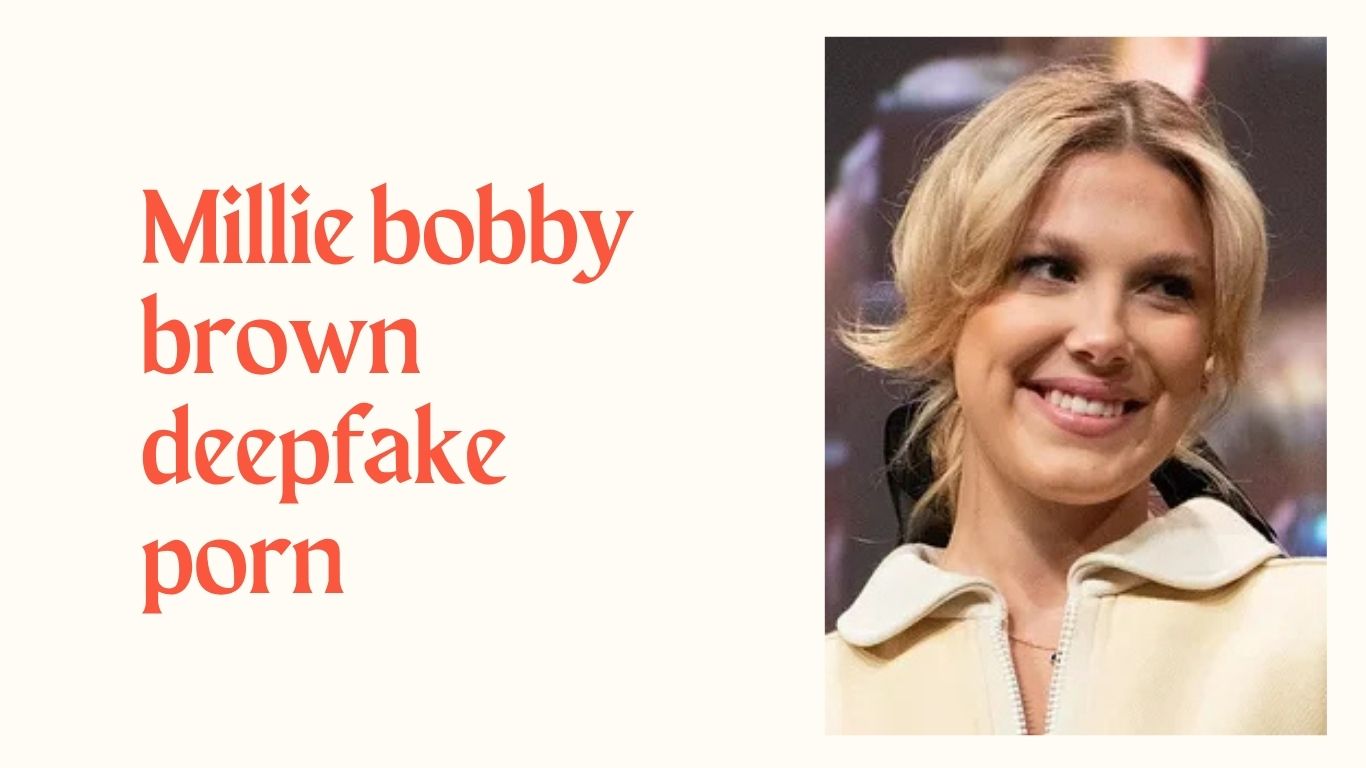
In 2023, when she was just 19 years old, actress Millie Bobby Brown joined a horrifyingly long list of female celebrities—from Taylor Swift to Scarlett Johansson—who have had their likenesses stolen and manipulated into sexually explicit deepfake videos. For Brown, who rose to fame as a child star on Stranger Things, the violation is particularly acute: many of the fake videos were created and circulated while she was still a minor.
Deepfake pornography uses artificial intelligence to map a person’s face onto existing adult content. What was once a crude, easily detectable manipulation has become, in just a few years, hyper-realistic and nearly impossible for platforms to scrub from the internet. Brown’s name — “Millie Bobby Brown deepfake porn” — is now routinely searched alongside explicit terms, a phenomenon that digital rights advocates call “image-based sexual abuse” — not porn.
A Target Since Childhood
Millie Bobby Brown was 12 years old when Stranger Things premiered. By 14, she had already become a subject of online sexualization and deepfake creation. In a 2022 interview with The Wrap, she spoke about the helplessness she felt: “They’re trying to tarnish my reputation. It’s dirty. It’s wrong.” Unlike traditional revenge porn, deepfakes don’t require a real intimate moment—just a public photo and malicious intent.
The actress has repeatedly urged social media platforms to act faster. “It’s a violation. No one should have to see fake, disgusting images of themselves,” she said. Yet, despite her fame and resources, the videos remain a persistent problem. If a global star cannot fully remove them, advocates argue, what hope is there for ordinary victims?
The Legal Landscape Is Catching Up—Slowly
For years, there was no federal law in the United States specifically banning deepfake pornography. That began to change with the passage of the DEFIANCE Act (Disrupt Explicit Forged Images and Non-Consensual Edits Act) in 2024, which allows victims to sue creators and distributors for damages. The UK’s Online Safety Act also criminalizes sharing deepfake intimate images without consent.
However, enforcement remains a nightmare. Many deepfake videos are produced in jurisdictions with no laws against them, and the sheer volume—millions of videos online—overwhelms reporting systems. For every video taken down from Twitter (X) or Reddit, ten more appear.
The Psychological Toll
Experts compare deepfake victimization to a form of digital rape. Dr. Mary Anne Franks, a law professor and author of The Cult of the Constitution, notes: “The harm is not in the falseness of the image, but in the real degradation, harassment, and loss of control experienced by the victim.” For a young woman like Brown, who has spoken openly about anxiety and the pressures of growing up in the spotlight, deepfakes add a layer of inescapable trauma.
Victims report needing to constantly monitor the internet, fearing that employers, friends, or family members might stumble upon the fakes. Some have lost job opportunities or faced bullying at school.
What Can Be Done?
While there is no silver bullet, a combination of legal, technological, and cultural shifts is emerging:
- Watermarking and Provenance: Tech companies like Adobe and Microsoft are promoting Content Credentials—digital “nutrition labels” that track whether an image has been altered by AI.
- Better Platform Policies: Google has started delisting “Millie Bobby Brown deepfake porn” searches, and Meta has expanded its “non-consensual intimate imagery” policies to include synthetic content.
- Education: Teaching digital literacy—especially to young people—about how to identify deepfakes and why sharing them is abuse, not entertainment.
Conclusion: A Face Is Not a Consent
Millie Bobby Brown has built a career on playing a girl with extraordinary powers. But fighting deepfake porn requires no superpowers—it requires legal accountability, corporate responsibility, and a basic shift in human decency. Every time someone searches for “Millie Bobby Brown deepfake porn,” they are not looking for fiction. They are looking for a real person’s stolen image. And as long as that demand exists, the supply will follow.
The fight against deepfake pornography is not about prudishness or censorship. It is about the fundamental right to control your own face, your own body, and your own story—especially when you never consented to be in that story at all.